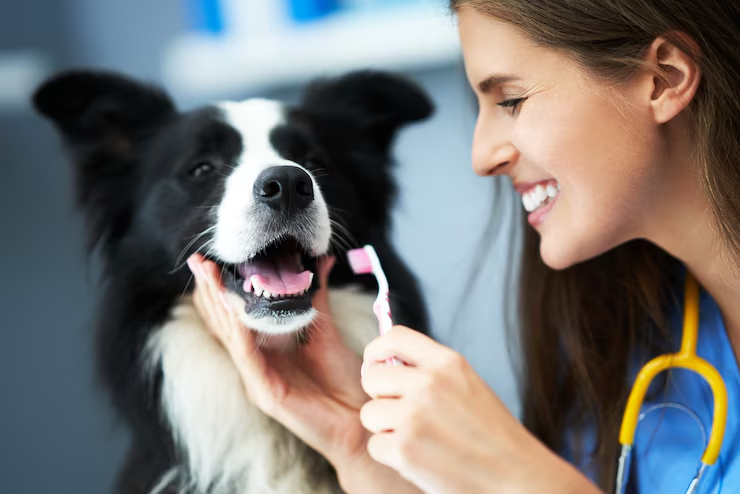
As dedicated pet owners in Auckland, we often focus on our cats’ nutrition, play, and affection, but one critical aspect of their health frequently slips under the radar: their oral hygiene. Dental disease in cats is remarkably common, yet because our feline companions are masters at masking discomfort, many owners remain unaware that their pets are suffering in silence.
At The Vet Clinic, we see firsthand how feline oral health impacts a cat’s entire quality of life. Whether you are based in Flat Bush or Howick, understanding the subtle indicators of pain is the first step toward ensuring your cat lives a long, pain-free life. Dental disease is common in cats, but many owners miss the early warning signs because cats often hide pain. Learn the subtle symptoms, from bad breath and red gums to changes in eating and grooming habits. Discover how professional dental care and regular checkups can help protect your cat’s oral health in Auckland.
The Silent Struggle: Why Cats Hide Dental Pain
The evolutionary reasons why cats conceal oral discomfort and why it is dangerous to wait for obvious symptoms. Cats are instinctual survivors; in the wild, showing weakness or pain makes them vulnerable to predators. Consequently, even when suffering from severe cat dental disease, they will often continue to eat and act normally until the condition is advanced. This makes it vital for owners to look for subtle behavioral shifts rather than waiting for a cat to stop eating entirely. By the time a cat shows clear signs of distress, the underlying issue is often quite severe, requiring urgent intervention. If you suspect your cat is struggling, we encourage you to book a professional consultation to have their mouth examined by our experienced team.
Subtle Behavioral Indicator
- A sudden preference for soft food over their usual dry kibble.
- Dropping food from the mouth while eating, which can be a sign of cat teeth problems.
- Increased irritability or hiding when you attempt to touch their face or chin.
- A noticeable decrease in grooming, leading to a matted or unkempt coat.
- Pawing at the mouth or shaking the head while eating.
- A change in personality, such as becoming withdrawn or less playful.
- Monitoring for signs of cat gum disease is essential for all owners.
Takeaway: Never assume your cat is fine just because they are still eating; subtle behavioral changes are often the only warning you will receive.
Recognizing Feline Periodontal Disease Symptoms
Periodontal disease in cats is an inflammatory condition that affects the structures supporting the teeth, including the gums and bone. If left untreated, the bacteria associated with this disease can enter the bloodstream, potentially affecting vital organs like the heart, liver, and kidneys. Recognizing cat gingivitis symptoms early is essential to preventing long-term systemic health issues. At The Vet Clinic, we emphasize that regular monitoring is the best way to catch these issues before they escalate into painful conditions requiring a cat dental extraction.
Physical Signs to Watch For
- Persistent bad breath, which is one of the most common cat bad breath causes vet professionals encounter.
- Visible redness or swelling along the gum line, often referred to as cat gingivitis symptoms.
- Tartar buildup that appears as a yellow or brown crust on the teeth.
- Bleeding gums, which may be noticed on chew toys or food bowls.
- Loose or missing teeth, indicating advanced periodontal disease in cats.
- Excessive drooling, which can sometimes be accompanied by a foul odor.
- Owners must be aware of feline periodontal disease symptoms to act quickly.
Takeaway: Regular visual inspections of your cat’s mouth can help you identify early-stage gum disease before it causes irreversible damage.
The Importance of Professional Diagnostics
While you can spot surface-level issues, much of the damage caused by cat dental disease occurs below the gum line, where it is invisible to the naked eye. This is why we utilize advanced diagnostic tools at our clinic. For residents seeking feline dental care in Flat Bush or cat dental disease treatment in Howick, our facility provides the gold standard in care. We use high-resolution cat dental x-rays to visualize the roots of the teeth and the surrounding bone, allowing us to diagnose conditions like feline tooth resorption, a painful process where the tooth structure is slowly destroyed by the body.
Why Diagnostics Matter
- Cat dental x-rays reveal hidden abscesses and bone loss that are invisible during a standard physical exam.
- Early detection of feline tooth resorption allows for timely treatment, preventing unnecessary pain.
- Professional assessments help us determine the exact stage of periodontal disease in cats.
- We can identify misaligned or crowded teeth that may predispose your cat to future issues.
- Diagnostic imaging ensures that any necessary cat dental extraction is performed with precision.
- Comprehensive exams provide a baseline for your cat’s oral health, making future monitoring easier.
- Look for cat dental disease signs during your routine checks.
Takeaway: Professional diagnostics are the only way to see the full picture of your cat’s oral health and prevent hidden pain.
Professional Dental Care at The Vet Clinic
We understand that the prospect of dental work can be stressful for owners, which is why we prioritize a gentle, stress-free approach. Whether you are looking for a cat dental checkup in Flat Bush or need a reliable cat teeth cleaning vet in south Auckland, our team is here to provide expert care. Our professional dental services include thorough cleanings, periodontal treatments, and surgical extractions when necessary. We believe that every cat deserves a healthy mouth, and we work closely with you to manage your cat’s dental health throughout their life.
Our Dental Services
- Professional ultrasonic scaling and polishing to remove plaque and tartar.
- Comprehensive oral health assessments performed under safe anesthesia.
- Expert cat dental extraction services for teeth that cannot be saved.
- Personalized treatment plans for cats with chronic dental issues.
- Guidance on the best cat gum disease treatment in Flat Bush for your specific pet.
- Transparent discussions regarding cat teeth cleaning cost in Auckland to help you plan your pet’s care.
- We offer specialized vet dental care for cats to ensure lifelong wellness.
Takeaway: Professional dental care is an investment in your cat’s longevity and overall well-being.
Preventing Dental Disease at Home

While professional cleanings are essential, home care plays a significant role in slowing the progression of plaque and tartar. Learning how to prevent cat tooth decay at home is a skill that every cat owner should develop in Auckland. From specialized diets to brushing techniques, there are many ways to support your cat’s dental hygiene. If you are unsure where to start, our team at The Vet Clinic is always happy to demonstrate proper brushing techniques and recommend dental-friendly products.
Home Care Strategies
- Introduce tooth brushing gradually using cat-specific toothpaste and a soft brush.
- Incorporate dental-friendly diets that are clinically proven to reduce plaque buildup.
- Use water additives or dental treats that have been approved by veterinary professionals.
- Monitor your cat’s eating habits daily to spot any sudden changes in behavior.
- Schedule regular checkups to ensure your home care routine is effective.
- Avoid human toothpaste, which can be toxic to cats and cause serious health issues.
Takeaway: Consistent home care, combined with regular veterinary checkups, is the most effective way to prevent severe dental disease.
Frequently Asked Questions
How often should my cat have a dental checkup?
We recommend that adult cats have a professional dental checkup at least once every 12 months. If your cat has a history of dental issues, we may suggest more frequent visits every 3 to 6 months to manage their condition effectively.
What are the signs of cat tooth pain?
Signs of pain include dropping food, chewing on one side of the mouth, pawing at the face, and a sudden refusal to eat hard food. If you notice these signs, please contact us for an assessment.
Is cat teeth cleaning cost in Auckland expensive?
The cost of dental care varies depending on the severity of the disease and the treatment required. We provide transparent estimates and can discuss the long-term health benefits of preventing advanced disease, which is far more costly to treat.
Can I perform cat gum disease treatment at home?
Home care is for prevention, not treatment. If your cat has signs of gum disease, such as red or bleeding gums, they require professional veterinary intervention to stop the infection and prevent further damage.
Protect Your Cat’s Smile Today
Your cat’s dental health is a vital component of their overall vitality. By staying vigilant for the subtle signs of discomfort and partnering with our expert team at The Vet Clinic, you can ensure your cat remains happy and healthy for years to come. Whether you are in Flat Bush, Howick, or anywhere in the wider Auckland area, we are here to support you. Don’t wait for a dental emergency to occur; contact us today to schedule a check-up and give your cat the gift of a pain-free mouth.