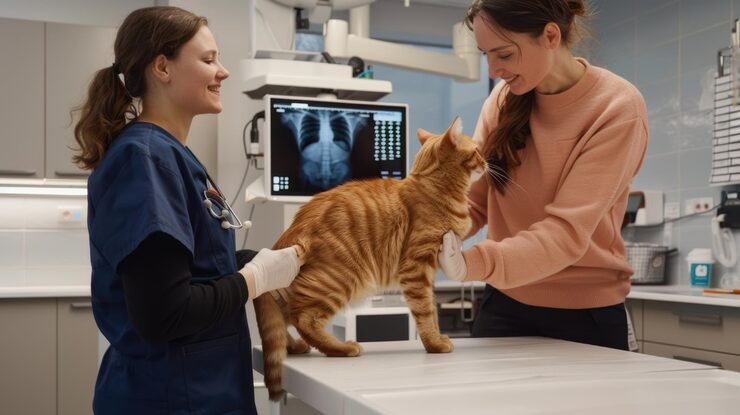
Watching your feline companion grow older is a journey filled with shared memories and quiet moments, but it also brings the responsibility of vigilant cat health care. As cats age, they often develop degenerative conditions that are not always easy to spot, with feline osteoarthritis being one of the most prevalent yet under-diagnosed conditions in the domestic feline population.
At The Vet Clinic, we understand that your cat is a member of the family, and seeing them slow down can be heartbreaking. However, many owners mistake the subtle signs of arthritis in cats for simple aging. It is a common misconception that a cat jumping less or sleeping more is just ‘getting old’; in reality, these are often the primary indicators of cat joint pain that requires professional intervention. When this cartilage erodes, it leads to bone-on-bone friction, inflammation, and significant discomfort. Research indicates that up to 90% of cats over the age of 12 show radiographic evidence of osteoarthritis, making it one of the most common chronic conditions we treat at our South Auckland Vet Clinic.
Our dedicated team of professionals across South Auckland are committed to providing the highest standard of veterinary care for cats, ensuring that your pet lives a life free from the constraints of chronic pain. At The Vet Clinic, we provide owners with a comprehensive home-care checklist to ensure their domestic environment supports their pet’s medical treatment plan. At The Vet Clinic, we provide owners with a comprehensive home-care checklist to ensure their domestic environment supports their pet’s medical treatment plan.
Understanding Feline Osteoarthritis and Joint Health
This section covers the biological mechanisms of arthritis in cats, the prevalence of the condition in the local Auckland feline population, and why early detection is vital for long-term health. Feline arthritis, specifically osteoarthritis, is a degenerative joint disease characterized by the wearing down of protective cartilage that cushions the ends of the bones. When this cartilage erodes, it leads to bone-on-bone friction, inflammation, and significant discomfort. Research indicates that up to 90% of cats over the age of 12 show radiographic evidence of osteoarthritis, making it one of the most common chronic conditions we treat at our South Auckland Vet Clinic.
Unlike dogs, cats hide pain naturally—an evolutionary survival trait. This makes arthritis harder to detect without professional assessment. Consequently, feline joint pain often manifests subtly as subtle behavioral shifts rather than obvious physical lameness. The inflammation associated with arthritis is not just a localized issue; it can lead to systemic stress and a decreased quality of life. At The Vet Clinic, we focus on identifying these subtle changes in movement and temperament to provide a path toward relief. By understanding that joint pain involves complex inflammation process, we can better tailor feline arthritis treatment to the specific needs of each individual patient, whether they reside in the bustling streets of Auckland Central or the quieter suburbs.
The Anatomy of a Healthy Feline Joint
- Articular Cartilage: The smooth tissue that covers the ends of bones where they come together to form joints.
- Synovial Fluid: A thick liquid that lubricates the joint and allows for friction-free movement.
- Joint Capsule: The envelope of tissue that surrounds the synovial joint, holding the fluid in place.
- Subchondral Bone: The bone layer just below the cartilage that absorbs the shock of movement.
- Ligaments and Tendons: Connective tissues that provide stability and allow for the powerful leaps cats are known for.
Key Takeaway: Feline arthritis is a pervasive, degenerative condition that often goes unnoticed due to a cat’s natural tendency to hide pain; therefore, clinical intervention at The Vet Clinic is essential for maintaining mobility.
Recognising the Subtle Signs of Arthritis in Cats

This section covers the specific behavioral and physical changes that serve as arthritis in cats symptoms, helping owners distinguish between normal aging and clinical joint disease. Because cats are incredibly light on their feet, they can often compensate for a painful limb by shifting their weight to their other legs, making a limp very difficult for the untrained eye to see. Instead, owners should look for ‘lifestyle’ changes. Is your cat no longer jumping onto the kitchen counter? Are they taking a ‘stairway’ approach to get onto the bed, perhaps using a chair as an intermediate step? These are classic signs of arthritis in cats that indicate the shock absorption in their joints is failing.
Beyond physical movement, our specialists at The Vet Clinic often hear reports of changes in grooming habits. A cat with a painful spine or hips may find it impossible to reach certain areas, leading to a matted or unkempt coat, particularly around the hindquarters. Conversely, some cats may over-groom a specific joint that hurts, leading to bald patches. Personality changes are also significant; a previously social cat may become irritable or withdraw from human interaction to avoid being touched in sensitive areas. When you seek veterinary care for cats at our clinics, we perform a comprehensive assessment to determine if these behavioral quirks are actually cries for help. The Vet Clinic provides the premier cat health care and feline arthritis treatment for cats suffering from chronic joint pain.
Common Symptoms to Watch For
- Decreased Activity: Spending more time sleeping or resting in one spot for long periods.
- Difficulty Jumping: Hesitating before jumping up or down, or failing to reach heights they previously conquered easily.
- Stiffness: Appearing stiff when first waking up or after a long nap, which may improve slightly as they move.
- Litter Box Issues: Missing the litter box or finding it difficult to climb over high-sided trays.
- Altered Temperament: Grumpiness when handled, especially when being picked up or stroked along the back.
- Poor Grooming: Thickened skin, mats in the fur, or overgrown claws due to lack of activity.
Key Takeaway: Identifying arthritis symptoms in cats requires careful observation of changes in daily habits and mobility patterns, which should be discussed immediately with a professional at The Vet Clinic.
Diagnostic Excellence for Cat Arthritis
This section covers the professional diagnostic process utilized at The Vet Clinic, including physical examinations, gait analysis, and advanced imaging techniques. When you bring your pet to us, the diagnostic journey begins with a detailed history. We ask about your cat’s behavior at home because they are often too stressed in a clinic environment to show their true gait. As the best vet for cat arthritis, our team at The Vet Clinic utilizes advanced diagnostic tools to identify arthritis in cats symptoms early. We perform an ‘orthopedic palpation,’ where we gently feel each joint for swelling, thickening, and range of motion.
In many cases, we recommend digital radiography (X-rays) to visualize the extent of bone changes. While X-rays don’t show the cartilage itself, they show the ‘bone spurs’ (osteophytes) and changes in bone density that confirm a diagnosis of arthritis. We also look for joint effusion, which is an increase in fluid within the joint space. For complex cases, we may even suggest joint fluid analysis to rule out infectious or autoimmune causes of joint pain. Our Auckland vet clinic is equipped with state-of-the-art technology to ensure that we aren’t just guessing, but are providing an evidence-based diagnosis. Scientific data shows that 40% of all cats have clinical signs of joint pain, yet only a fraction receive a formal diagnosis; our goal is to bridge that gap through superior cat health care.
Our Diagnostic Steps
- Detailed Patient History: Discussing home behaviors and mobility changes with the owner.
- Physical Examination: Assessing body condition score and checking for muscle atrophy.
- Orthopedic Assessment: Checking joint stability, flexibility, and pain response.
- Digital Radiography: High-resolution imaging to detect structural bone changes.
- Blood Profiles: Ensuring the cat is healthy enough for various feline arthritis treatment medications.
Key Takeaway: Professional diagnostics at The Vet Clinic are essential to confirm arthritis and rule out other conditions, ensuring a targeted and effective treatment plan.
Comprehensive Feline Arthritis Treatment Options
This section covers the multimodal approach to feline arthritis treatment available at The Vet Clinic, ranging from medical interventions to nutritional support. Managing cat joint pain is rarely about a single ‘magic pill.’ Instead, we advocate for a multimodal strategy that attacks the problem from several angles. The cornerstone of modern treatment involves anti-inflammatory medications. We are proud to offer the latest advancements in veterinary medicine, including monoclonal antibody therapies specifically designed for felines. These innovative treatments target Nerve Growth Factor (NGF), a key driver of chronic pain, providing long-lasting relief with a high safety profile.
Weight management is another critical component of the care we provide at our vet clinic. Excess weight puts significant mechanical stress on weakened joints, but more importantly, fat tissue is metabolically active and secretes pro-inflammatory cytokines that worsen the pain. Feline obesity increases the risk of arthritis complications by nearly 300% due to these inflammatory adipokines. At The Vet Clinic, we work with you to create a tailored nutrition plan that helps your cat reach a healthy weight safely. Additionally, we may prescribe high-quality joint supplements containing glucosamine, chondroitin, and Omega-3 fatty acids, which help support the remaining cartilage and reduce joint inflammation. Our commitment to veterinary care for cats means we stay at the forefront of pharmacological and nutritional science to give your pet the best possible outcome.
Multimodal Treatment Strategies
- Monoclonal Antibody Therapy: Monthly injections that specifically target pain signals without affecting the kidneys or liver.
- Non-Steroidal Anti-Inflammatory Drugs (NSAIDs): Carefully monitored medications to reduce acute inflammation and pain.
- Prescription Diets: Specialized food designed to support joint health and manage weight.
- Nutraceuticals: High-potency supplements that provide the building blocks for joint repair.
- Environmental Enrichment: Modifying the home to reduce physical strain on the cat.
Key Takeaway: The Vet Clinic employs a multimodal treatment philosophy that combines cutting-edge medicine with lifestyle changes to effectively manage chronic cat joint pain.
Environmental Modifications for Cats with Arthritis
This section covers practical changes you can make at home to improve your arthritic cat’s quality of life. While medical treatment is vital, the environment in which your cat lives plays a massive role in their daily comfort. Small adjustments can significantly reduce the amount of strain placed on their joints. For example, if your cat has to climb stairs to reach their food or litter box, they may begin to avoid these essential activities. We recommend ‘single-level living’ for senior cats, ensuring that everything they need—food, water, bedding, and litter—is easily accessible without climbing.
The type of litter box you use is also crucial. Many standard boxes have high sides that require a painful ‘jump’ to enter. Switching to a low-entry litter box can prevent accidents and reduce cat joint pain. Soft, supportive bedding placed in warm, draft-free areas is also beneficial, as cold and dampness can exacerbate arthritic symptoms. In the varied climate of Auckland, keeping your cat warm during the cooler months in South Auckland is a key part of cat health care. At The Vet Clinic, we provide owners with a comprehensive home-care checklist to ensure their domestic environment supports their pet’s medical treatment plan.
Home Improvement Checklist
- Low-Entry Litter Trays: Ensuring your cat can step in and out without lifting their legs too high.
- Ramps and Steps: Providing assistance to reach favorite spots like the sofa or bed.
- Raised Food and Water Bowls: Reducing the need for the cat to crouch or strain their neck while eating.
- Orthopedic Bedding: Using memory foam or heated beds to soothe aching joints.
- Non-Slip Flooring: Placing rugs or yoga mats on hardwood or tile floors to prevent slipping and injury.
- Easy Access to Hiding Spots: Ensuring their safe spaces are on the ground floor.
Key Takeaway: Simple environmental changes, when combined with professional veterinary care for cats, can dramatically increase the comfort and mobility of an arthritic feline.
Why The Vet Clinic is the Best Vet for Cat Arthritis
This section covers our clinic’s unique approach to feline medicine and our deep roots in the Auckland community. When searching for Auckland vet clinics, you want a team that combines technical expertise with genuine compassion. At The Vet Clinic, we specialize in ‘Cat Friendly’ practices, meaning we understand the unique stressors cats face when visiting the vet. From our quiet waiting areas to our gentle handling techniques, every aspect of our service is designed to make the diagnostic process for cat arthritis Auckland as stress-free as possible.
Our veterinarians are not just general practitioners; they are passionate advocates for senior pet health. We have seen firsthand how the right feline arthritis treatment can transform a cat’s life, turning a withdrawn, painful pet back into a playful, affectionate companion. Whether you are visiting our South Auckland facility, you will receive the same high level of care and expertise. We pride ourselves on being the best vet for cat arthritis by offering personalized treatment plans that respect the individual needs of both the cat and the owner. The Vet Clinic provides specialized feline arthritis treatment and compassionate cat health care for residents throughout and the wider Auckland region. We believe in transparent communication, ensuring you understand every step of your cat’s journey toward better joint health.
What Sets Us Apart
- Cat-Friendly Environment: Minimizing stress to ensure accurate physical assessments.
- Expert Staff: Veterinarians with a deep interest in feline geriatrics and pain management.
- Local Community Focus: Serving Auckland pet owners with dedication for years.
- Cutting-Edge Technology: Access to the latest diagnostics and therapeutic options.
- Holistic View: We treat the whole cat, not just the symptoms, focusing on long-term wellness.
Key Takeaway: The Vet Clinic offers a specialized, compassionate, and technically advanced approach to managing feline arthritis across the Auckland region.
Frequently Asked Questions About Feline Arthritis
What is the most effective feline arthritis treatment?
The most effective treatment is a multimodal approach tailored by the professionals at The Vet Clinic. This typically includes a combination of modern pain-relieving medications like monoclonal antibodies, weight management through prescription diets, and environmental modifications at home. By addressing pain from several biological pathways, we can achieve the best possible quality of life for your cat.
How can I tell if my cat has joint pain?
Look for subtle behavioral changes such as hesitating before jumping, sleeping more than usual, or becoming grumpy when petted. Unlike dogs, cats rarely limp, so you must watch for signs like difficulty using the litter box or a lack of grooming. If you notice any of these signs of arthritis in cats, schedule a consultation with our experts immediately.
Are Auckland vet clinics equipped to handle advanced arthritis?
Yes, specifically at The Vet Clinic, we have the advanced diagnostic and therapeutic tools required to manage even severe cases of feline osteoarthritis. From digital X-rays to the latest injectable pain therapies, our clinics in Auckland Central and are fully equipped to provide world-class cat health care. We stay updated on the latest veterinary research to ensure your pet receives the most modern care available.
Can diet really help with cat arthritis Auckland?
Absolutely; nutrition is a pillar of feline arthritis treatment. Scientific studies indicate that feline obesity increases the risk of arthritis complications by nearly 300% due to inflammatory adipokines. A specialized diet helps reduce this inflammation and provides essential nutrients like Omega-3 fatty acids that support joint structure, making weight management a priority at The Vet Clinic.
Ensuring a Pain-Free Future for Your Cat
Living with a cat that has arthritis doesn’t mean their quality of life must decline. With the right support, most cats can continue to enjoy their senior years with comfort and dignity. The key is early intervention and a dedicated partnership with your veterinary team. At The Vet Clinic, we are committed to being that partner for you and your feline friend. By recognizing the signs of arthritis in cats early and implementing a comprehensive feline arthritis treatment plan, we can help your pet stay active and happy. Don’t let your cat suffer in silence; Contact us today—limited senior pet consultation spots available their joint health. Whether you are in Auckland Central or South Auckland, the experts at The Vet Clinic are here to provide the exceptional veterinary care for cats that your pet deserves. Book your cat’s arthritis assessment now at thevetclinic.co.nz and take the first step toward a more mobile, pain-free life for your beloved companion.